Publications
At ÉSADHAR, research gives rise to a variety of publications, notably those produced by the various research groups.
The school’s annual thematic research journal, formerly RADIAL (2018–2023), will be rebranded in 2025 as ard – Art Recherche Design. This new edition will feature scholarly articles as well as experimental publication formats.
Magazines ↓
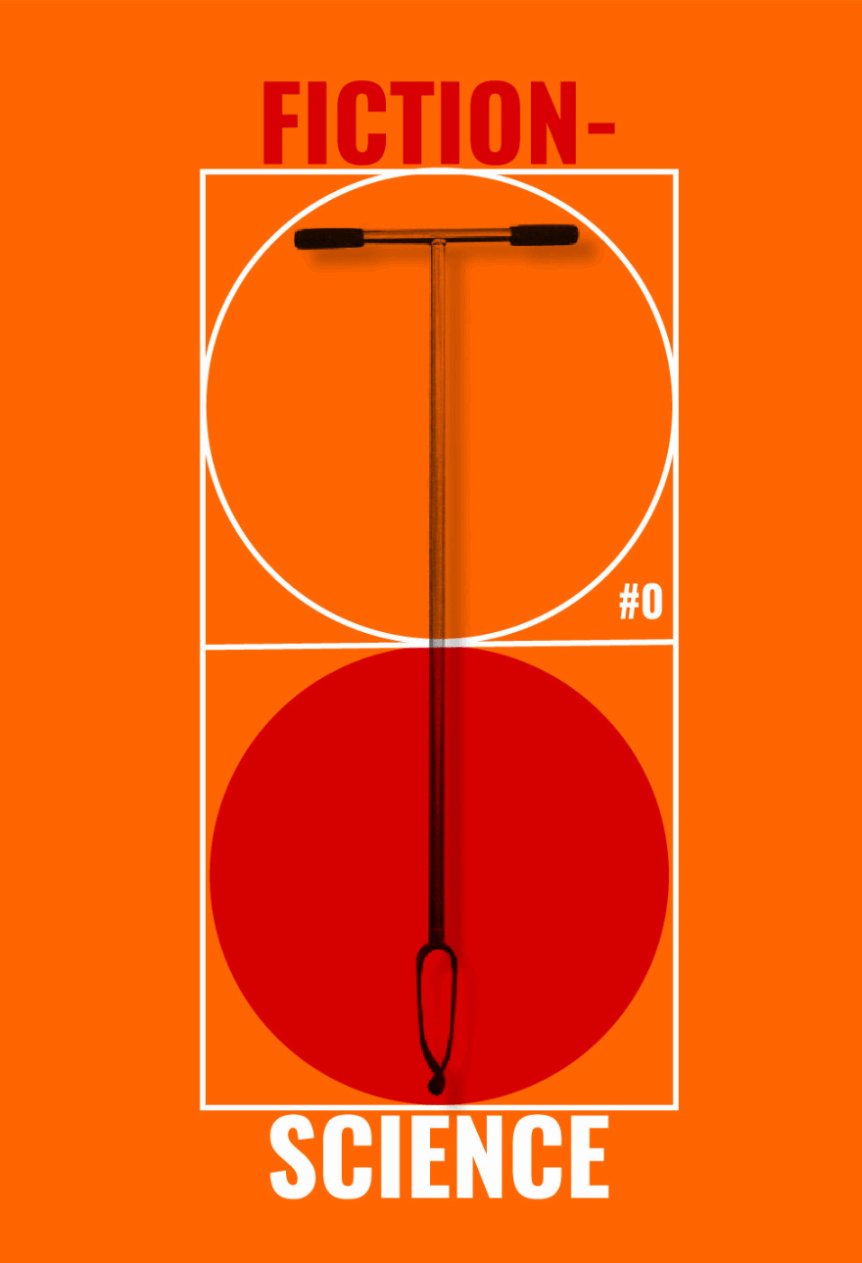
Science fiction
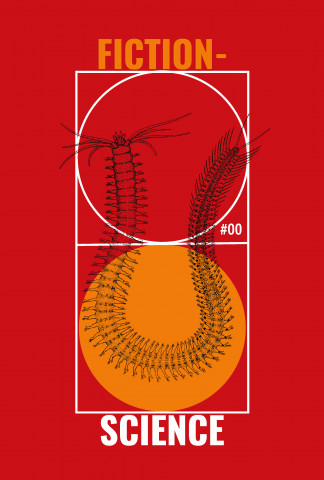
| #00 The journal Fiction-Science aims to highlight and explore the various layers of these connections. It seeks to serve as a meeting ground for artists and scientists, where the freedom of imagination, the boldness of humor, and the seriousness of research in art and science coexist. It welcomes both fully developed works and ideas, as well as ongoing or future science-art experiments—whether already realized or merely conceived. This issue brings together contributions from artists and researchers who have worked in the Vimeu, a region of Picardy located at the gateway to Normandy, an ancestral stronghold of locksmithing. Fiction-Science is a journal of research and science-art experimentation. Founded in 2021 by Dominique De Beir (ésadhar), Samuel Etienne (EPHE-PSL), and Tania Vladova (ésadhar). Graphic design by Samuel Etienne and Stéphanie Guglielmetti. Published by Strandflat and distributed by Les presses du réel. | 2023 | |
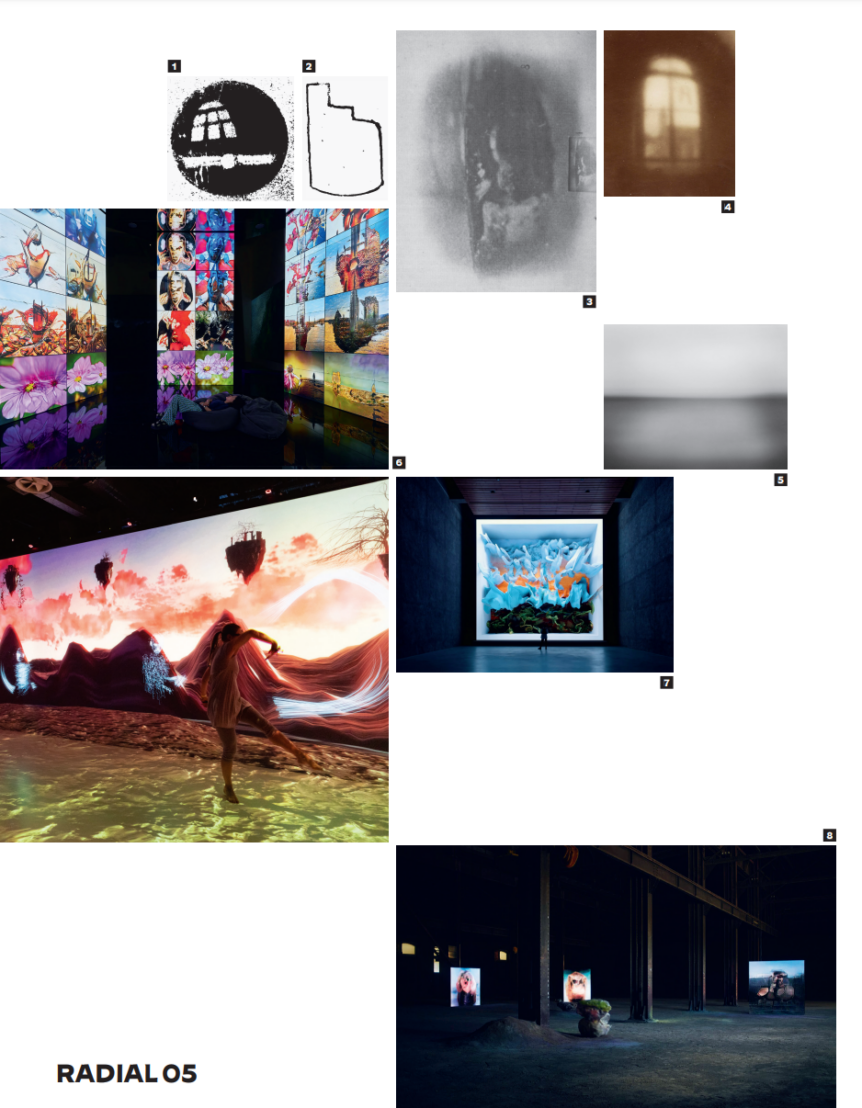
Radial No. 5
| Photography Put to the Test of Abstraction For its latest issue, Radial magazine sought to explore the presence, resurgence, or persistence of abstraction in contemporary photography. This issue follows the exhibition organized in 2021 by Frac Normandie Rouen, in collaboration with the Centre Photographique d’Île-de-France in Pontault-Combault and the Micro Onde art center in Vélizy, as well as the study day that accompanied it in November, initiated by Frac and ÉSADHAR – École supérieure d’art et de design Le Havre-Rouen. Titled Photography Put to the Test of Abstraction, the exhibition, organized simultaneously by the three institutions at each of their respective venues, aimed to highlight the various ways in which artists, at the turn of the 21st century, continue to employ abstract or non-figurative forms in their photographic works. Curated by Véronique Souben with the participation of Michelle Debat, Vincent Bonnet, Marc Lenot, Héloïse Conésa, Julie Martin, Nathalie Delbard, Audrey Illouz, Simon Zara, Julien Lomet, Carla Gannis, Calypso Legendre, Lise Sagnes, and Maxence Alcalde. | 2023 | |
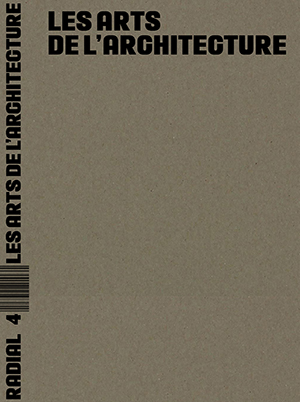
Radial No. 4
| The Arts of Architecture For issue 4 of the journal Radial, ÉSADHAR invited ENSA Normandie to take the helm of its editorial team. This invitation from an art school to an architecture school is all the more significant because it runs counter to the institutional separation between the teaching of visual arts and architecture that has existed since the late 1960s. At that time, architecture sought to establish its autonomy by bringing together the disciplines directly related to it within a single program, while aligning itself with the university and scientific methods of analysis. Over time, this approach has obscured the relationship between art and architecture. On the one hand, in architecture schools, it has become difficult to speak of architecture as art and creation; conversely, installations, happenings, and all forms of artistic intervention in public space are virtually equated with architectural practice. To honor the invitation to contribute to this art journal, the school of architecture deemed it appropriate to rethink architecture as art; beginning with the art specific to architecture—the art of building as a source of a poetics unfolding in the real world—and also by considering the arts that intervene in the process of architectural creation. Edited by Arnaud François and featuring contributions from Hedia Ben Nila, Haïfa Miled, Mounir Dhouib, Jeremy Hawkins, Alicia Chauvat, Arnaud François, Michel Matival, Brigitte Poitrenaud-Lamesi, Rémi Groussin, Apolline Brechotteau, Blanche Bertrand, Clément Hébert, and Misia Forlen. | 2022 | |
Science fiction
| #0 The journal Fiction-Science aims to highlight and explore the various layers of these connections. It serves as a meeting ground for artists and scientists, where the freedom of imagination, the boldness of humor, and the seriousness of research in art and science coexist. It welcomes fully developed works and ideas, as well as ongoing or future science-art DIY experiments—whether realized or merely conceived. Fiction is far from being the exclusive domain of art and literature. It is just as present in science as daydreaming and experimentation, inventiveness, and a stubborn passion for discovery. Instead of the parallel, utopian, or dystopian worlds of the future depicted in so-called science fiction works, science fiction constitutes a field of research into the subtle connections between artistic and scientific practices. By delving into the fertile ground of science-art, unexpected links and new affinities emerge from serendipitous encounters and shared methods. A cross-pollination. | 2021 | |
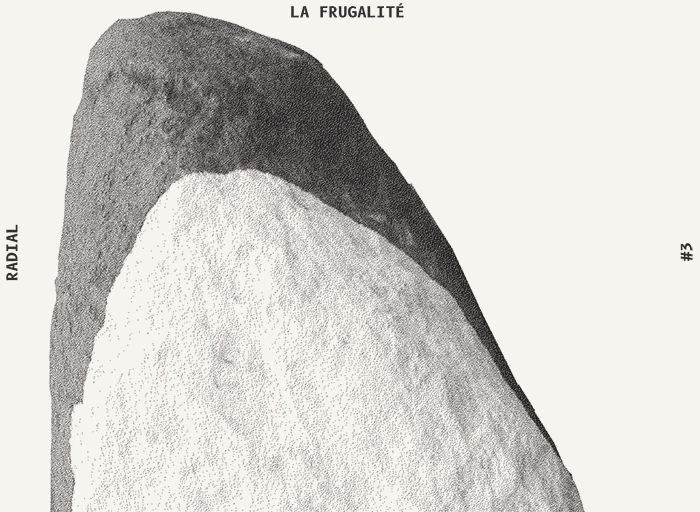
Radial No. 3
| Frugality
When, in late 2019, the editorial board of Radial met to develop a theme for its third issue, we could not have imagined that, just a few months later, the current discourse on frugality would take a very particular turn. With the emergence of COVID-19 and its rapid spread leading to lockdowns, questions about how we use the world seemed to arise in a very concrete way. During this period, we were able to reflect on our needs and the dead ends of a model that likely keeps us too often occupied with non-essential tasks. It is in this context that the idea of “frugality” comes to the fore. Edited by Maxence Alcalde with contributions from Brigitte Poitrenaud-Lamesi, Laurent Tixador, Julie Beauté, Dominique Gauzin Muller, Alexandre Melay, Jean-Baptiste Farkas, Katja Gentric, Arnaud François, and Matthieu Martin. | 2020 | |
Radial No. 2
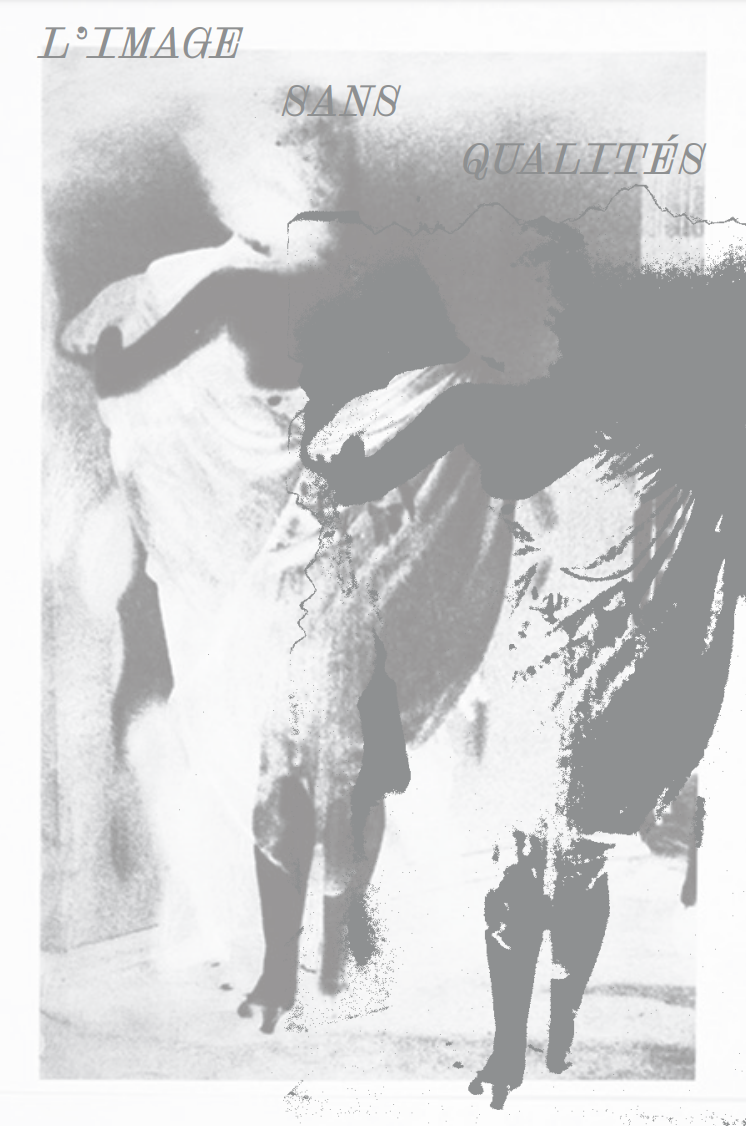
| The Image Without Qualities This volume contains two distinct sections, each comprising articles that share a common focus on the status, production, and function of the image today. The first section, which lends its title to the volume as a whole, is drawn from a selection of papers presented at the international conference *L’image sans qualités* (Rouen, 2018), as well as articles that were subsequently solicited and selected. It brings together texts by artists, curators, historians, anthropologists, and philosophers offering reflections on the production and growing use of banal, ordinary, even boring images—images that challenge or subvert representation, or whose minute material characteristics render them barely perceptible. The second section, titled Varia, comprises contributions submitted by artists and researchers, most of whom are affiliated with the partner institutions of the RADIAN Doctoral Program, namely the École Supérieure d’Art et Design Le Havre/Rouen, the École Supérieure d’Arts et Médias de Caen, the École Nationale Supérieure d’Architecture de Rouen, and the Doctoral School 558, History, Memory, Heritage, Language. Edited by Tania Vladova and Colette Hyvrard, with contributions from Nora Labo, Maddalena Parise, Jacques Leenhardt, Diane Watteau, Emmanuel Zwenger, Berenice Serra, Jean-Noel Lafargue, Pravdoliub Ivanov, EDITH, Arnaud Francoi, Laurent Buffet, Michal Kozlowski, Jean-Louis Vincendeau, Bachir Soussi Chiadmi, and Stephan Köhler. | 2019 | |
Radial No. 1
| Putting an End to the Post-Internet Era
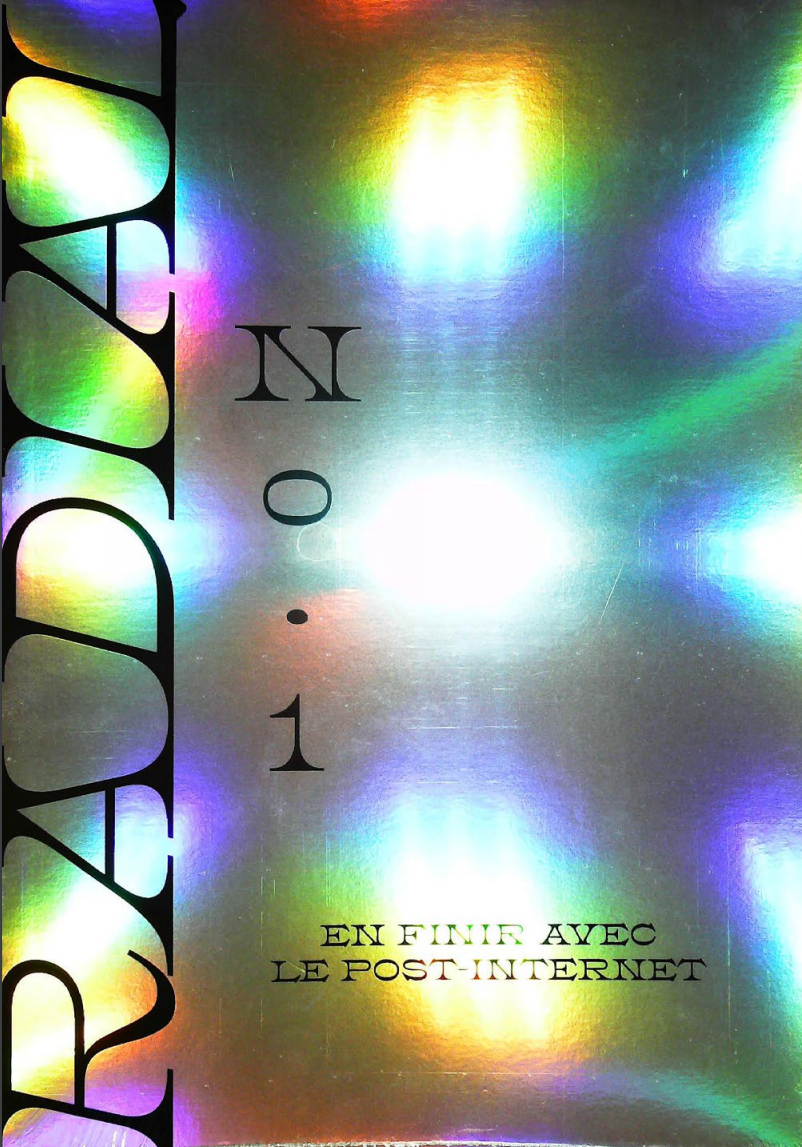
Few moments are as significant as the launch of a new research journal. Radial takes root in a particularly exciting context: the ongoing debates about research in art schools (visual arts, graphic design, architecture, and creative writing) and the new challenges arising from unprecedented partnerships with universities. For several years now, art schools have been questioning the advisability of creating doctoral programs, as well as how to defend the distinctiveness of art research within institutional frameworks that are already highly structured. It is therefore within this context that we created Radial, the research journal of the RADIAN Research Unit (Research, Art, Design, Innovation, Architecture in Normandy), a joint initiative of the Caen/Cherbourg School of Arts & Media (ESAM), the Le Havre-Rouen School of Art and Design (ESADHaR), the National School of Architecture of Normandy (ENSA), and Doctoral School 558 “History, Memory, Heritage, Language” (ED 558). Edited by Maxence Alcalde with contributions from Grégory Chatonsky, Garam Choi, Jacques Perconte, Laura Partin, Émilie Brout, Maxime Marion, Stéphane Trois Carrés, Guillaume Sorensen, Yann Owens, and Dominique Dehais. | 2018 |
Editions ↓
Publication of curatorial research
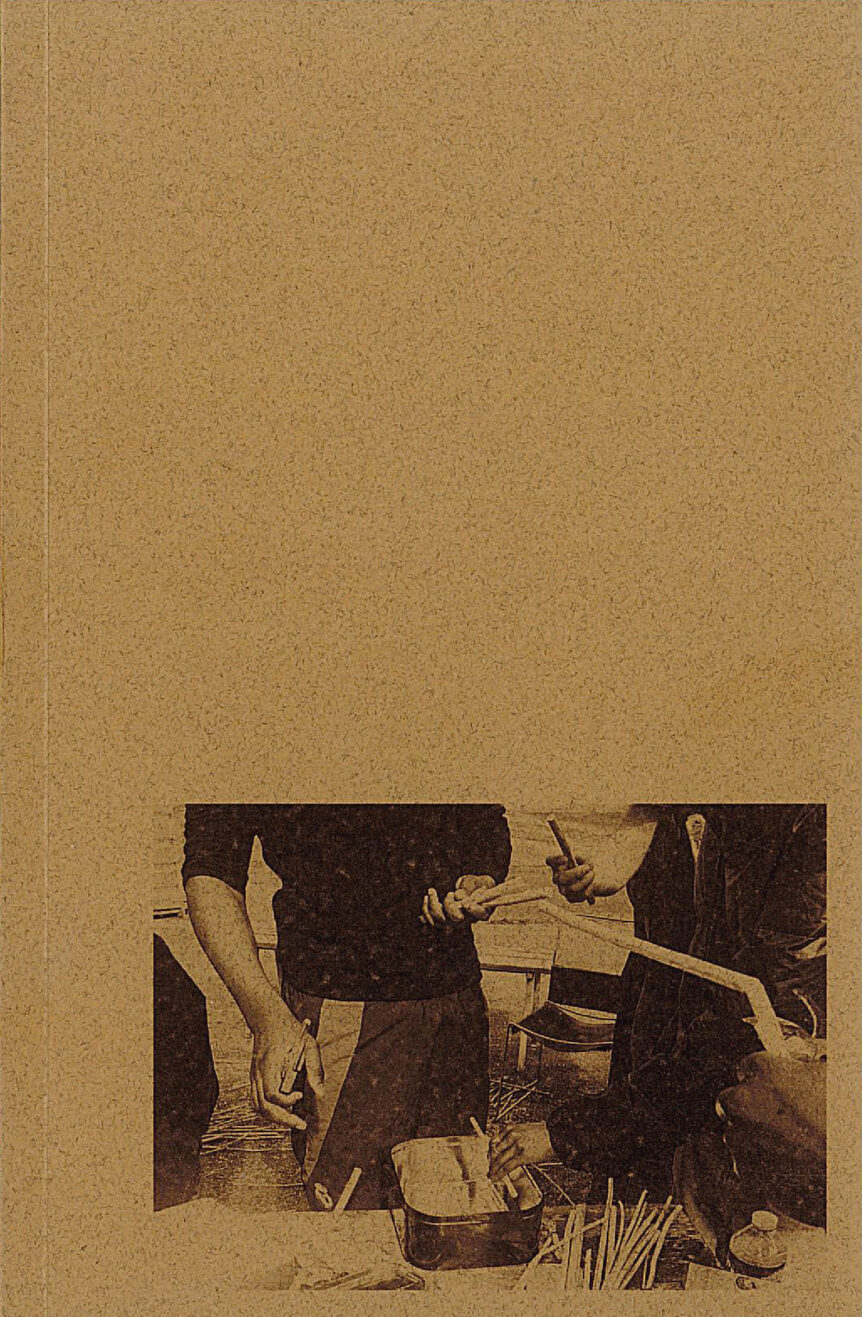
| Take root The curatorial project *Mettre Racine* proposed approaching the creation of tools and creative media—such as paints and paper—as an aesthetic endeavor in its own right. The aim was, in particular, to restore value and desirability to manufacturing processes that have been rendered invisible by industrial society by highlighting their poetic and social potential. For making things oneself from “local resources” implies taking an interest in the state of the commons as well as in how they are managed. This research was therefore conducted from the perspective of these commons, drawing particularly on the practices of social art insofar as they are capable of revealing the collective creativity at work in each territory. Contrary to the disconnection from reality and the sterilization of objects encouraged by technoproductivist innovation, the reflex has been, on the contrary, to turn toward the most immediate social and living environment in order to pay attention to it and take root there. The project sought to focus on the organic soil pulsing beneath the concrete slab of the neighborhood where Ésadhar is located. This forest, characteristic of the Grand’Mare, embodied, through its status as a natural commons, a fertile ground where these experiments in artistic degrowth could be deployed during the 2024–2025 academic year. This edition was realized with the participation and contributions of Ésadhar students, as part of the residency on socially engaged curatorial practices, initiated by Ésadhar and the André-Malraux Center. This residency, led by curator Licia Demuro from October 2024 to June 2025, is in collaboration with students from ÉSADHAR, notably Ameline Devos, Gaïa Gault, Lola-Rosetta Lesain, Shicheng Li, Lu Jacques, Mao Shuhai, Xinyi Shen, Mengting Wang, and Tianyu Yang. Texts by Licia Demuro and graphic design by Antoine Liberman. Printed at ÉSADHAR with the assistance of Jim Quere and Anne Lemeteil in January 2026. | 2026 | |
The Fronde
| It has to shine!
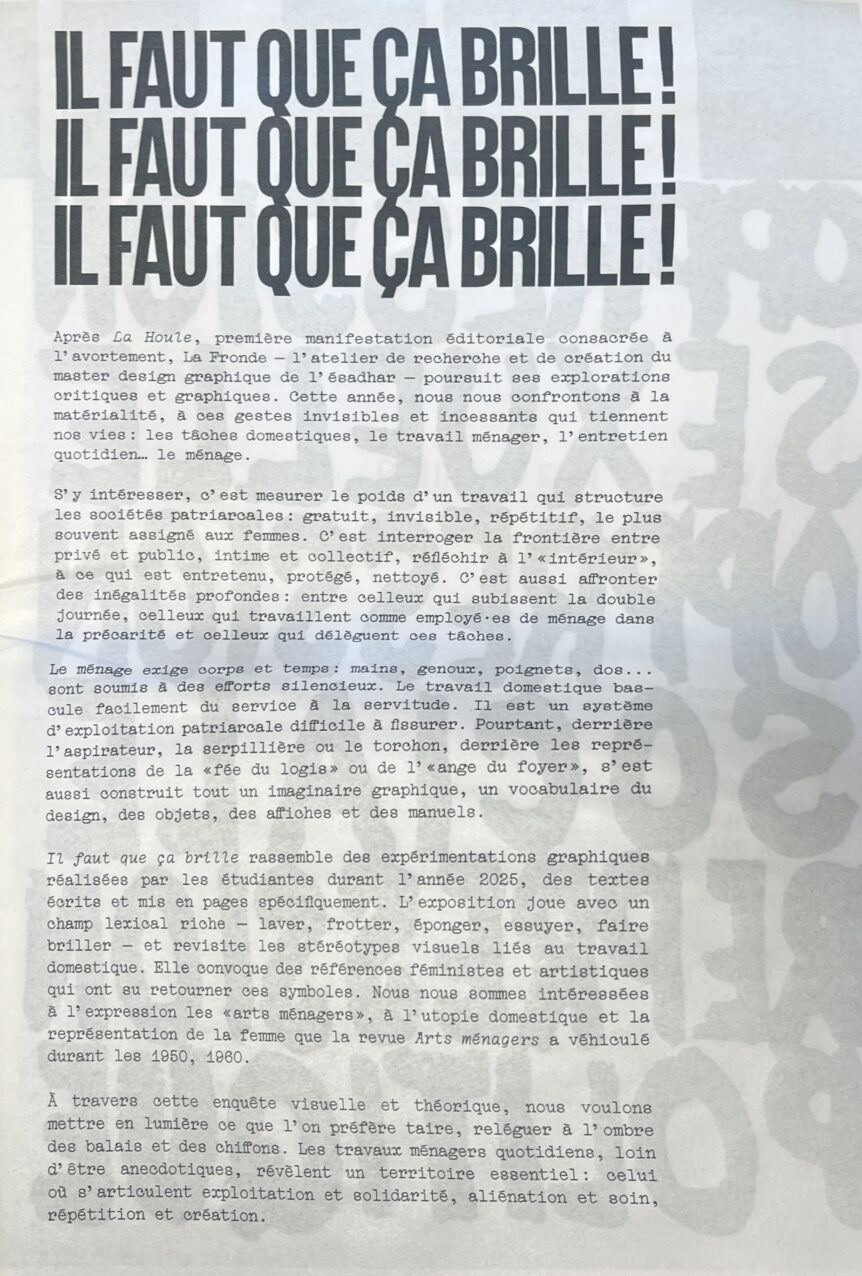
Following *La Houle*, the first editorial project dedicated to abortion, *La Fronde*—the first research and creative workshop of the ESADHAR Master’s in Graphic Design program—continues its critical and graphic explorations. This year, we are examining materiality, those invisible and ceaseless actions that sustain our lives: household chores, domestic work, daily upkeep… | 2025 | |
Belle Morue Edition
| Penzine, Arctic Artcazine
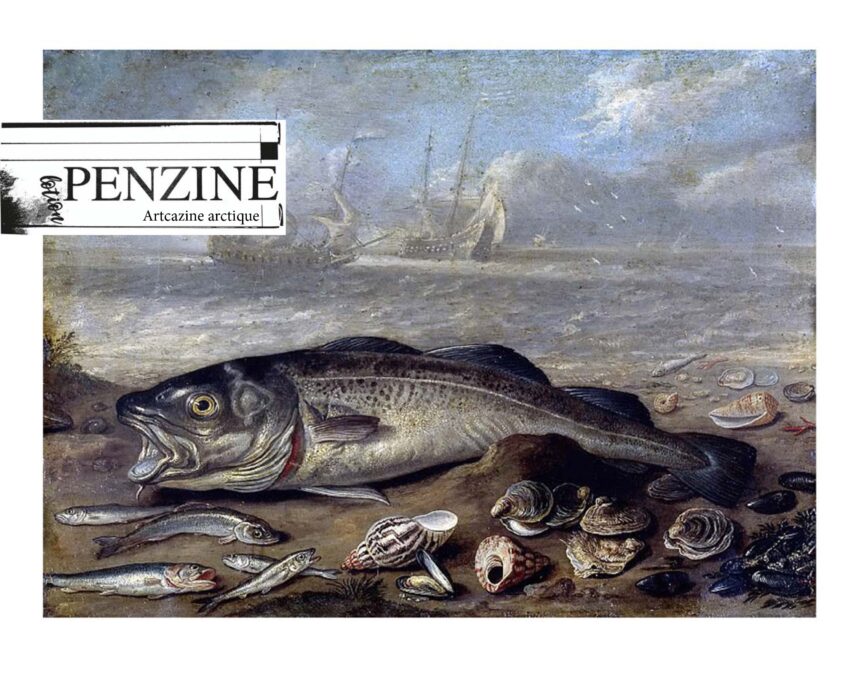
The Belle Morue project aims to establish an interdisciplinary research group studying the evolution of cod habitats in the North Atlantic, with a particular focus on Iceland. This group consists of specialists in the history of labor movements related to deep-sea fishing, coastal geography and Icelandic pelagic populations, medical and surgical research, art history and theory, and visual artists. The primary objective is to bring together creative energies and talents around a shared focus of research and creation: the cod, an emblematic fish of European expansion into the New World, a source of both wealth and misfortune, a species steeped in negative symbolism, which has shaped numerous coastal landscapes—in Iceland as well as in Brittany—but which now opens up new medical perspectives for innovative living-based treatments. Through this project, we aim to create a new field of study approached from the outset from a multidisciplinary perspective. Two initial lines of research are developed here: one on the evolution of cod-related landscapes; the other on the aesthetics of xenografts. The following individuals participated in the field mission from September 28 to October 5, 2024, and contributed to this issue: Dominique De Beir, Tania Vladova, Samuel Etienne, Philippe Richard. Layout: SE Cover illustration: Jan Van Kessel, The Old Fish and Seascape, 1656.
| 2024 | |
Publication of curatorial research
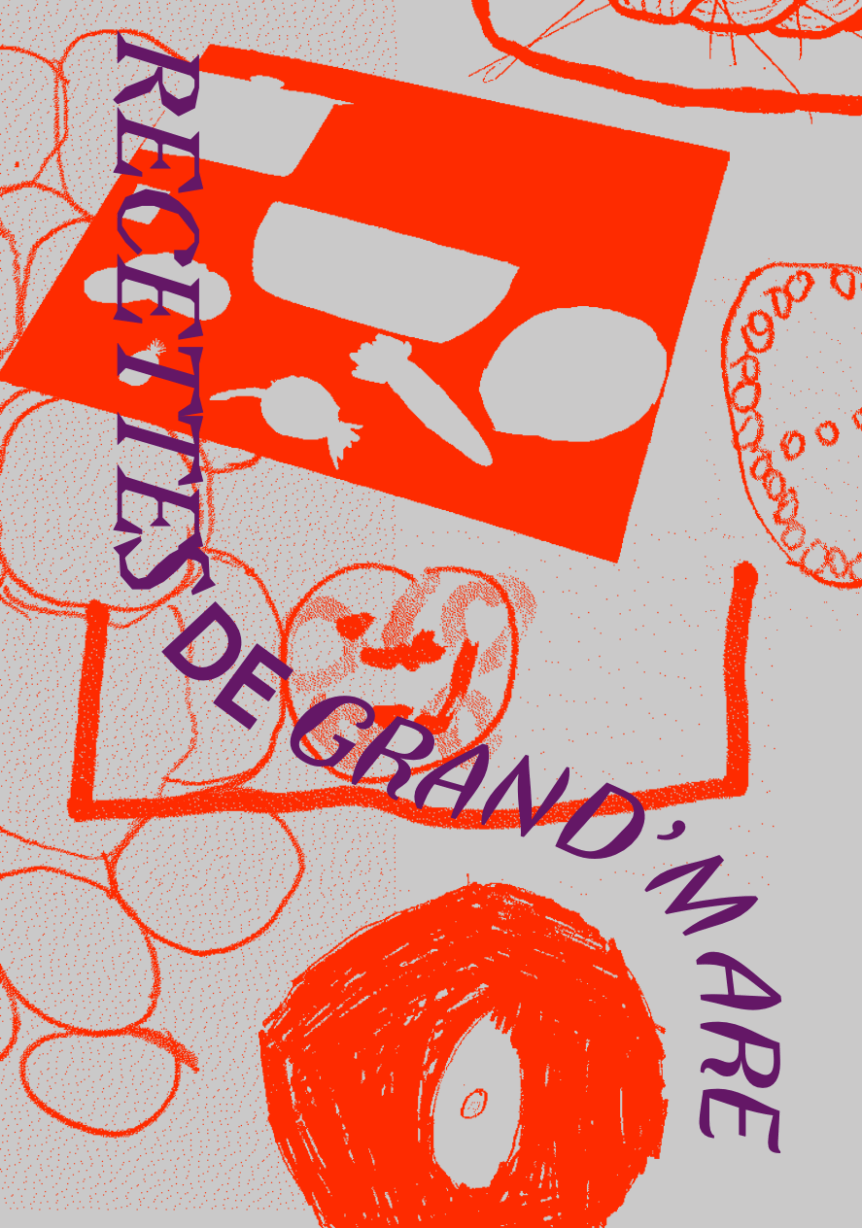
| Grand’Mare’s Recipes The recipes featured in this book reflect the culinary, cultural, and community richness of the Grand’Mare neighborhood. They were collected between December 2023 and May 2024 by Alice Feuillère, Emma Maignan, and Shenxi Song—three students at ÉSADHAR (the Le Havre-Rouen School of Art and Design), whose Rouen campus has been located in Grand’Mare since 2014—and Virginie Bobin, who initiated this project during a nine-month curatorial residency at the art school. Through the distribution of a questionnaire, participation in workshops, and the organization of gatherings, this collection of recipes served as a starting point for numerous discussions about food in the neighborhood and its history, as well as the life stories, memories, and aspirations of the people who live, study, work, and are involved there. In the recipes and the stories that accompany them, we hear echoes of family memories, working-class lives, journeys of exile, student resourcefulness, economic or ecological concerns, care for others, and the joy of sharing and tasting together. Sometimes reproduced exactly as they were shared with us, sometimes adapted into literary or video creations, these recipes paint a choral, eclectic, and appetizing portrait of the Grand’Mare and the generous, committed people we met there. Concept and editorial coordination by Virginie Bobin; graphic design and layout by Solène Langlais. Printed at the Extensions Libres workshop at ÉSADHAR. Recipe collection and writing by Virginie Bobin, Alice Feuillère, Emma Maignan, and Shenxi Song. | 2024 | |
See
| Photo archive of Labo VOIR’s activities This editorial project was created using photographic archives documenting the activities of Labo VOIR throughout its history. The visual richness of this image collection made it possible to create a monumental iconographic work measuring 4 meters by 3 meters on one of the walls of Galerie 65 at ÉSADHAR-Le Havre. Inspired by art historian Aby Warburg and writer André Malraux, we have juxtaposed and contrasted—without hierarchy—reproductions of artworks, news photographs, sculptures, graphic visuals, and screenshots across a vast wall surface, with the aim of tangibly understanding, through an overview, the narrative of each image and thereby generate new interpretations. Departing from any chronological logic, we created iconographic juxtapositions based on lexical, colorimetric, or formal relationships, guided by subjectivity. Once the wall of images was mounted and completed, it was presented to the public during the opening of the Extension exhibition in April 2022 at Galerie 65, inviting viewers to let their gaze wander through this constellation of images and create their own narrative by exploring the established correlations. The aim of this project was to capture the wall using a portable scanner in order to transfer the mural into this publication and to archive the temporary visual work created. The grid, meanwhile, serves as a record of the transition from the raw appearance of the wall to the printed image. The various tangible stages of the images linked to the different phases of technical reproduction have significantly altered their quality, thereby calling into question their condition and how they are perceived by readers. The fragmentation caused by the scanning process thus invites an active and wandering exploration of these image fragments as clues to a larger whole. The central section presents, through documentary photographs, the exhibition layout of the laboratory juxtaposed with those created during the production of the image wall in a sort of mise en abîme. This edition is conceived as a standalone project by the VOIR lab that contributes to rethinking art and graphic design toward a shared goal. Edited by Colette Hyvrard, Tania Vladova, and Gilles Acézat; produced by Camille Lesueur and Tom Philippine. | 2022 | |
Archive of the Edith Group’s Activities
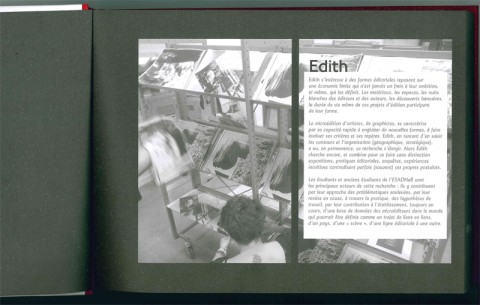
| Edith This book chronicles Edith’s activities through a richly illustrated timeline. Edith is a research group focused on micro-publishing and independent publishing initiated by ÉSADHAR, with students and alumni serving as its main contributors: they engage with the issues raised and challenge working hypotheses through practical application. The book’s format, which interweaves multiple levels of presentation and layout, was inspired by a bound (and completely obsolete) collection of photocopies from the manual of a famous image-processing software program, discovered in the collections of one of the art school’s libraries. | 2016 |